Tokyo Sky Hop Bus Routes & Map: The Ultimate Guide
Download the Tokyo Sky Hop Bus map and explore every stop. Detailed guide to the Red (Asakusa), Blue (Odaiba), and Green (Shinjuku) sightseeing courses.
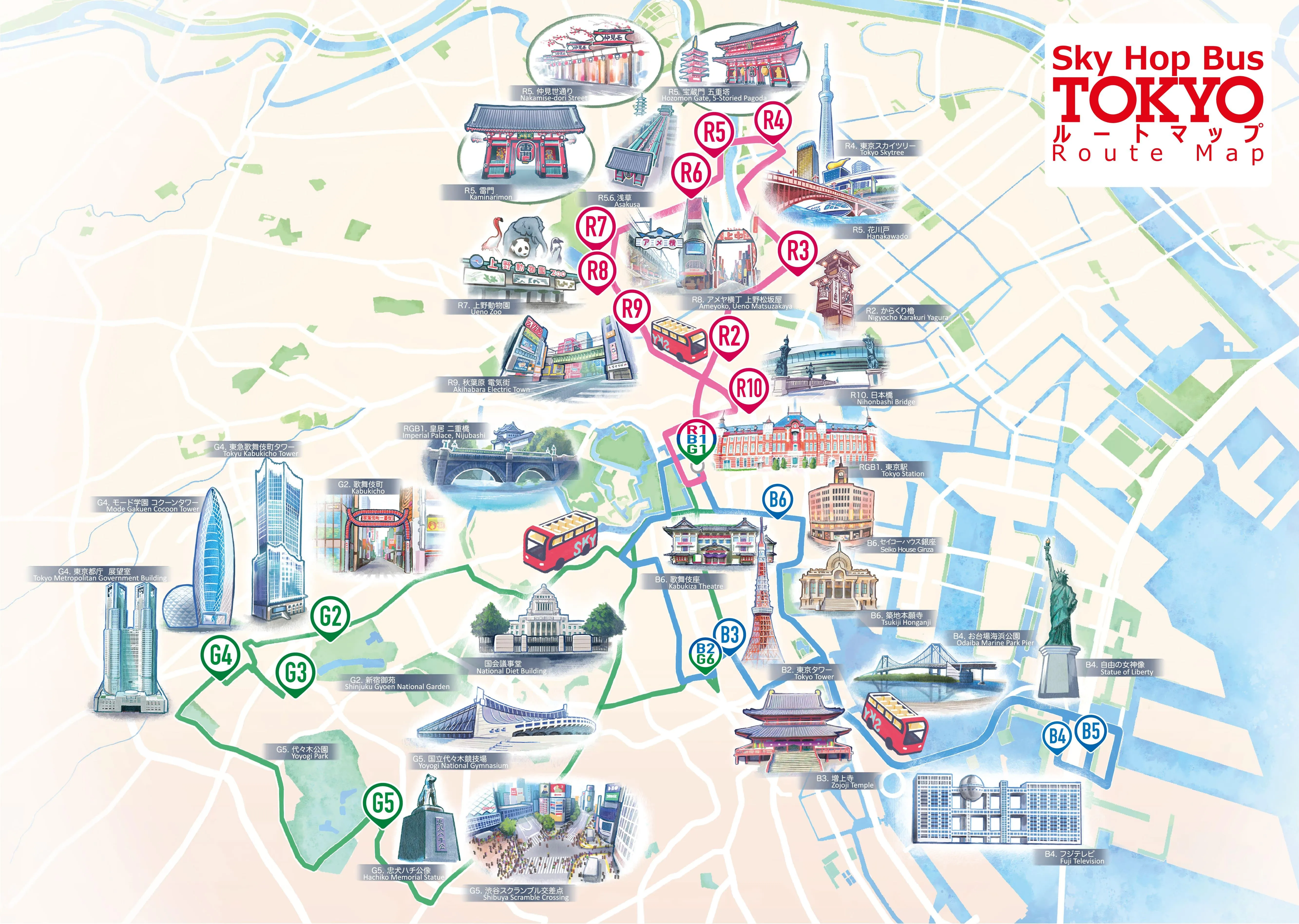
Understanding the layout of Tokyo can be daunting. It is a massive urban sprawl with no single "center." The Sky Hop Bus simplifies this by dividing the city into three digestible loops. This guide breaks down every course, showing you exactly what to see at each stop using our detailed route maps.
The Hub: Marunouchi Mitsubishi Building
All three courses converge at one central point: the Marunouchi Mitsubishi Building (near Tokyo Station).
- This is where you exchange your voucher for a physical ticket.
- It is the starting and ending point for most loops.
- Tip: Arrive 20 minutes early to grab a front-row seat on the top deck!
🔴 The Red Course: Asakusa & TOKYO SKYTREE
Theme: Old & New Tokyo Duration: 90 minutes (non-stop) Key Areas: Ueno, Asakusa, Akihabara
This is the most popular route for first-time visitors. It connects the historic downtown (Shitamachi) with the ultramodern Skytree.
Major Stops & Highlights
1. Ueno Station / Ueno Park
Why hop off? Culture and Nature.
- Ueno Zoo: See the giant pandas.
- Museums: The Tokyo National Museum and National Museum of Nature and Science are world-class.
- Ameyoko Street: A vibrant market street perfect for street food and bargain hunting.
2. Asakusa (Kaminarimon & Senso-ji)
Why hop off? History.
- Senso-ji Temple: Tokyo's oldest temple. Walk through the Thunder Gate (Kaminarimon) and explore the Nakamise shopping street.
- Rickshaw Rides: Catch a traditional rickshaw ride around the historic geisha district.
3. TOKYO SKYTREE Station
Why hop off? Views.
- The Tower: At 634m, the views from the Tembo Deck are unmatched.
- Solamachi: A massive shopping complex at the base. Great for souvenirs and lunch.
4. Akihabara
Why hop off? Pop Culture.
- Electric Town: Hundreds of electronics shops.
- Anime & Manga: The center of Otaku culture. Visit Radio Kaikan or a Maid Cafe.
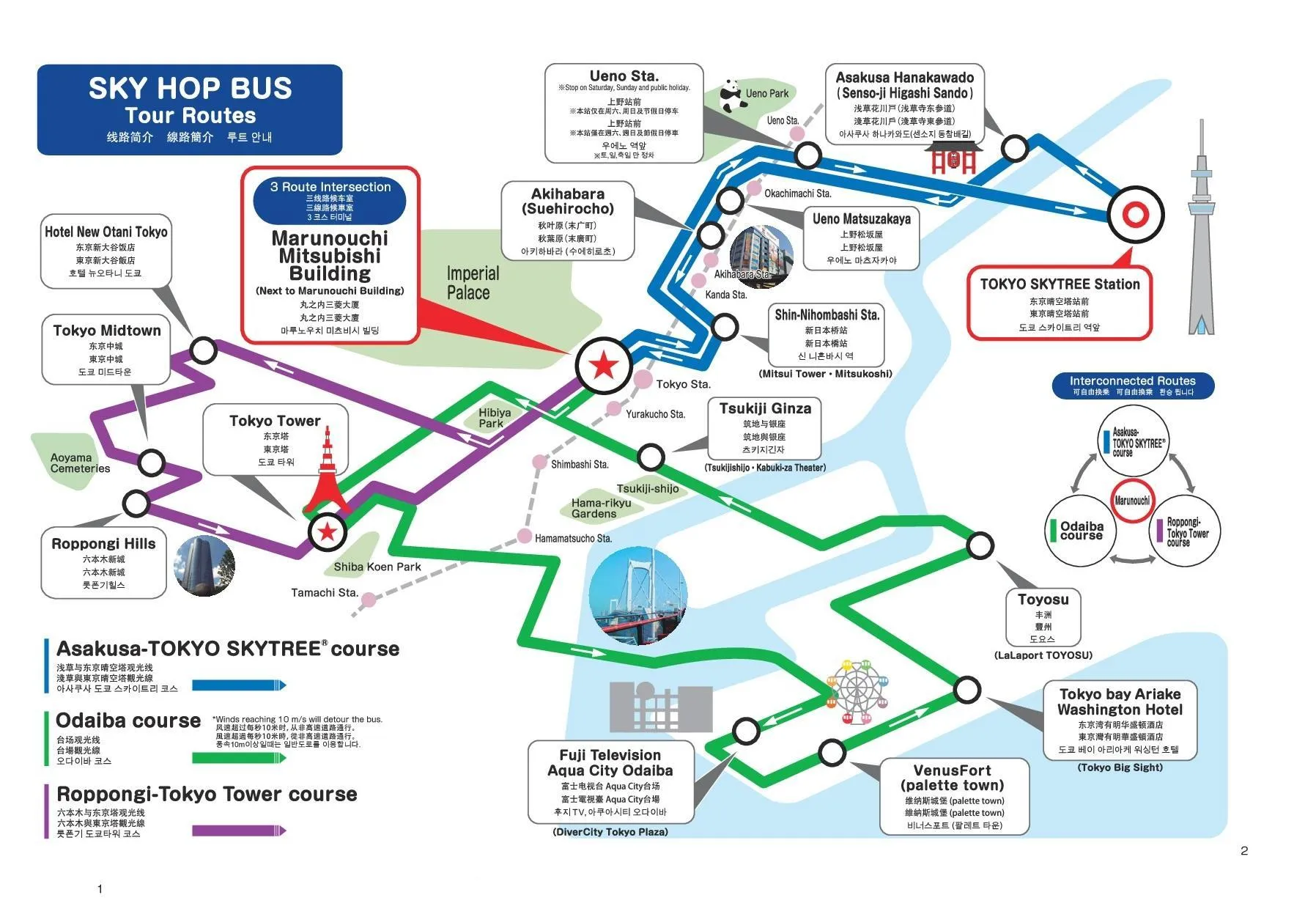 Above: A broader view of the Tokyo metropolitan area helps contextualize the distances between these hubs.
🔵 The Blue Course: Tokyo Tower & Odaiba
Theme: Bay Views & Monuments Duration: 120 minutes (non-stop) Key Areas: Tokyo Tower, Zojo-ji, Rainbow Bridge, Odaiba
This course feels more like a scenic drive. The crossing of the Rainbow Bridge is a highlight that requires no hopping off to enjoy.
Major Stops & Highlights
1. Tokyo Tower
Why hop off? The Icon.
- Zojo-ji Temple: The photo of the temple with the tower behind it is a classic.
- Shiba Park: A lovely green space for a picnic.
2. Rainbow Bridge (Drive-through)
You don't stop on the bridge, but the open-top bus offers the best view of the Tokyo skyline from the bay. Hold onto your hat!
3. Odaiba (Aqua City / Hilton Tokyo Odaiba)
Why hop off? Entertainment.
- Statue of Liberty: A replica overlooking the bay.
- Shopping: Aqua City and Decks Tokyo Beach are massive malls.
- Views: The view back towards the city at sunset is breathtaking.
4. Tsukiji (Outer Market)
Why hop off? Food.
- Sushi: The inner market moved, but the outer market is still the best place in Tokyo for fresh seafood breakfasts and street snacks.
🟢 The Green Course: Shinjuku & Shibuya
Theme: Urban Pulse & Nightlife Duration: 100 minutes (non-stop) Key Areas: Shinjuku, Shibuya, Harajuku
Note: The Green course sometimes operates on a limited schedule. Check the timetable!
This route takes you into the chaotic, neon-lit heart of western Tokyo.
Major Stops & Highlights
1. Shinjuku Gyoen
Why hop off? Serenity.
- One of Tokyo's largest and most beautiful parks. A distinct contrast to the skyscrapers next door.
2. Shibuya Station
Why hop off? The Scramble.
- Shibuya Crossing: The busiest intersection in the world.
- Hachiko Statue: The famous loyal dog.
- Shibuya Sky: An open-air observation deck on top of the Scramble Square building.
3. Harajuku / Omotesando
Why hop off? Fashion.
- Takeshita Street: The center of teenage "kawaii" fashion.
- Meiji Jingu Shrine: A massive Shinto shrine located in a dense forest right behind the station.
🗺️ Navigating with the Map
(Refer to the detailed map images provided in your brochure or scroll up to the header image!)
Tips for Using the Map
- Intersections: Notice where the lines cross. You can technically switch from the Green Course to the Red Course at the Marunouchi terminal.
- One-Way Loop: Remember, the buses travel in a loop. If you miss a stop (e.g., Akihabara), you have to go all the way around again.
- Timetables: The map shows the route, but always check the live timetable on your phone. Traffic in Tokyo can delay buses by 10-15 minutes.
Which Ticket Option is Best?
- 1-Day Pass: Good if you want to focus on just one area (e.g., Red Course for Asakusa/Skytree) and see the rest from the bus.
- 2-Day Pass: Highly recommended. Use Day 1 for the Red Course (History) and Day 2 for the Blue & Green Courses (Modern City).
Tokyo is vast, but with the Sky Hop bus map in hand, it becomes a series of exciting, connected adventures.
About the Author

Tokyo Navigator
This guide is written by Japan travel enthusiasts to help you navigate Tokyo's hop-on hop-off system with confidence, providing practical advice beyond the standard brochures.
Tags
Comments (0)
Loading comments...